
Time · Awareness · Instinct
You will never
get today back.
Time is the one asset you can't earn more of, borrow against, or save for later. Everyone knows this. Almost no one feels it. That gap — between knowing and feeling — is where whole days quietly go missing.
No signup. No account. Your data stays on your device. Just a mirror.
"Where did the day go?"
We track our money to the cent. We count our steps, our calories, our screen time app by app. But ask most people how they spent yesterday between 2 and 6 pm, and you'll get a shrug.
Not because that time didn't matter — but because nothing asked them to notice it while it was happening. Memory is a terrible historian. It keeps the highlights and quietly discards the rest, which, statistically, is most of your life.
A time instinct isn't a talent some people are born with. It's a muscle. It only grows by noticing — in the moment, not in hindsight.
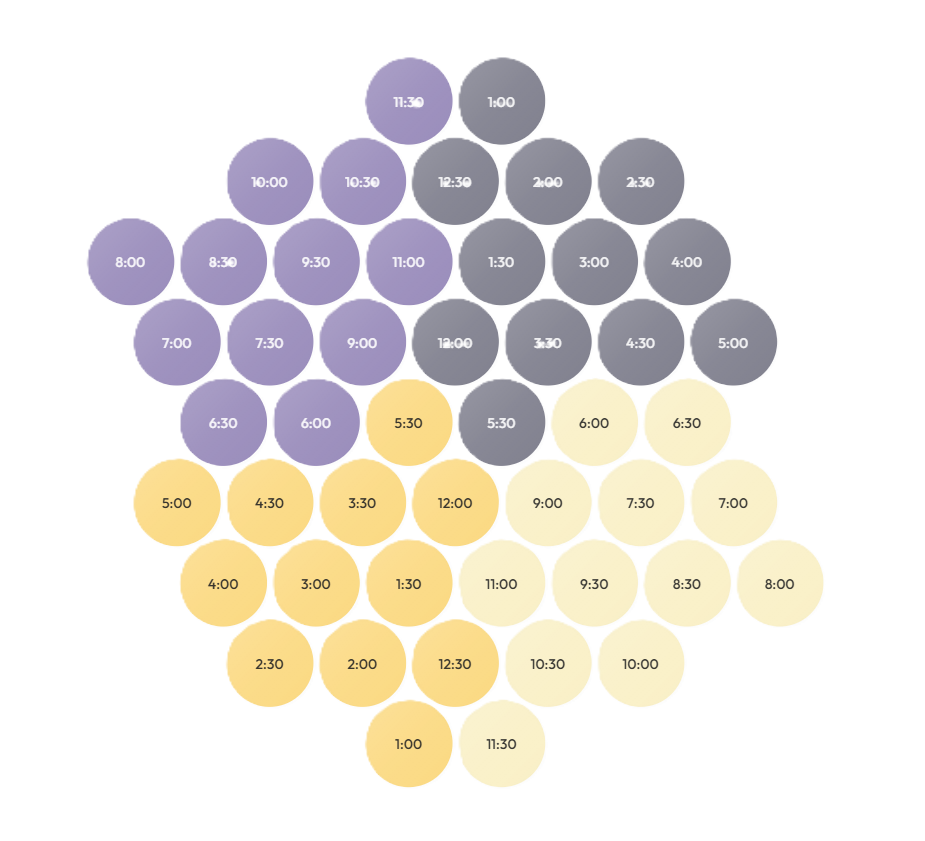
Twenty-four hours,
laid out in front of you.
This is what one honest day looks like once it's actually colored in — thirty minutes at a time. No app can hand you a time instinct. But it can hand you the mirror that builds one.
Every hour splits in two directions.
The minutes you don't notice don't disappear — they just get spent by default. Stretch 30 minutes a day across a year, and "nothing much" quietly becomes the difference between two very different lives.
- another scroll
- autoplay, next episode
- a half-read tab
- snoozed, again
Gone. No trace, no memory of where. Getting further from your goals.
- a page written
- a rep done
- a lesson finished
- one message that mattered
Small. Visible. Yours on purpose. Closer to your goals.
From just 20 redirected minutes a day. That's enough time to finish the first draft of that book.
Once your day has a shape, patterns you felt but never proved start showing up.
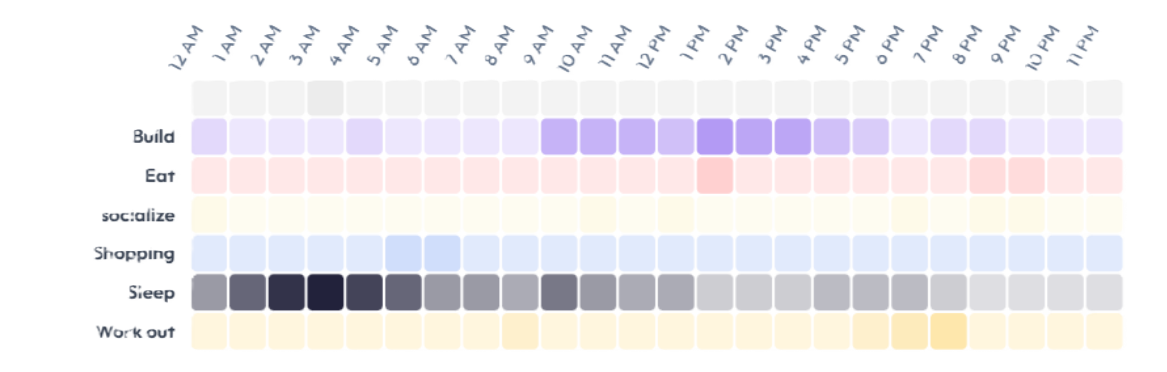
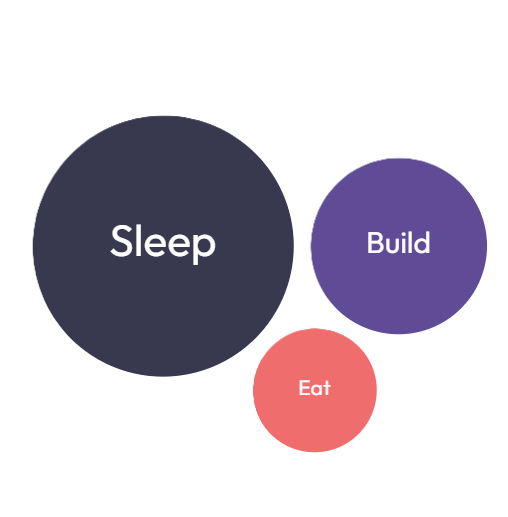
Time alone is half the story.
Capture
Log the hour and the how — mood, energy, focus, or any variable you invent yourself. Time means little without the context around it.
Correlate
After a few weeks, the data starts talking back: the hour you're sharpest, the block that quietly drains you, the pattern you swore wasn't real.
Course-correct
Not to optimize every minute — to choose, on purpose, what a good day now looks like for you. Incrementally. Intentionally.
This isn't about squeezing more out of your day.
It's about knowing what your day is actually made of, so the changes you make are ones you chose — not ones you backed into by accident. Miss a day? Start again. The point was never a perfect streak. It was noticing.
Time is still passing
while you read this.
It was a few seconds ago that you could have started.
Open Timbal →